
Simulating the Liquid-Liquid Phase Separation and Coacervation of Elastin-Like Peptides:
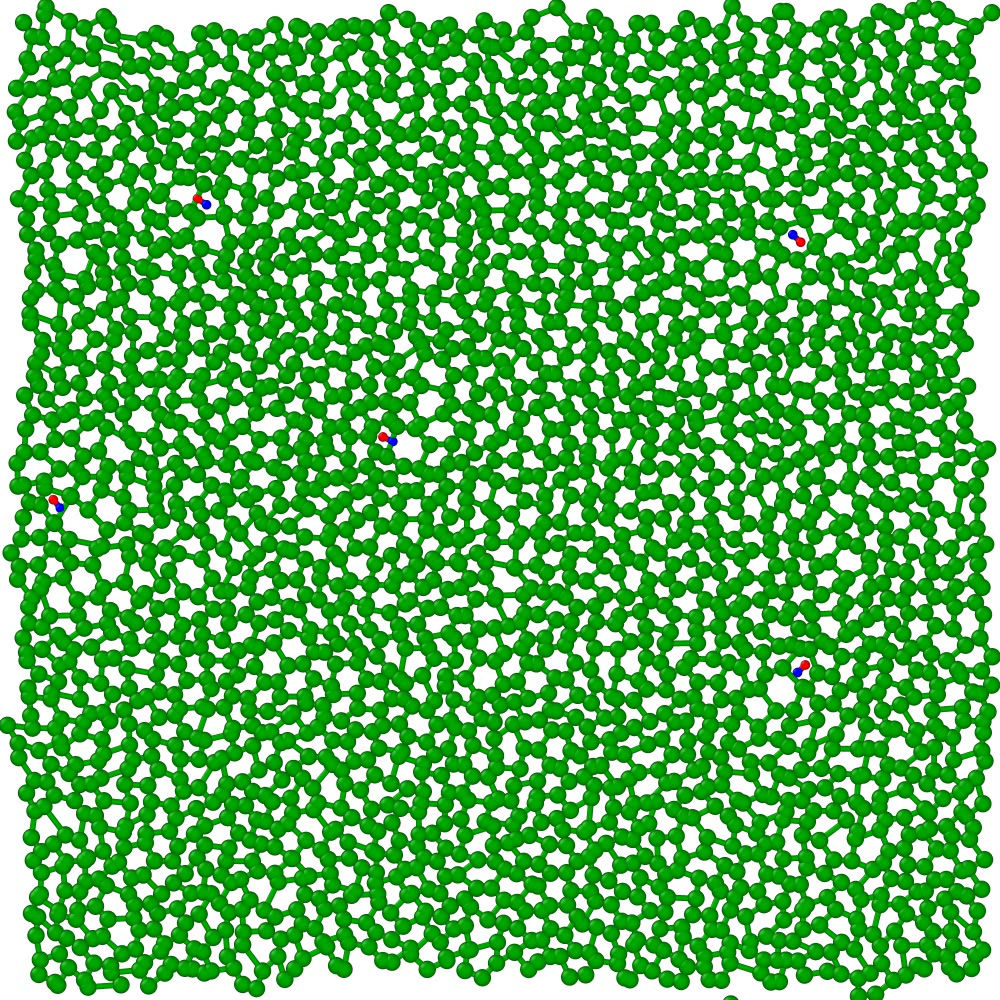
Our research focuses on deciphering the physical and chemical principles governing the phase behavior, self-aggregation, and conformational dynamics of bioengineered macromolecules. Specifically, we investigate Elastin-like Polypeptides (ELPs)—synthetic polymers mimicking the hydrophobic repeat units of tropoelastin—which serve as exceptional biomimetic models for Intrinsically Disordered Proteins (IDPs). Utilizing coarse-grained molecular dynamics (CGMD) simulations with the Martini 3.0 force field, our work comprehensively maps how environmental stimuli and precise sequence chemistry cooperatively drive macromolecular coacervation via Liquid-Liquid Phase Separation (LLPS). On the thermodynamic front, we have elucidated the coupled effects of temperature and polymer concentration on the kinetics of this LLPS process. Our simulations reveal that elevated temperatures accelerate coacervation by strengthening interchain polypeptide interactions while simultaneously dewetting the polymer interface, as evidenced by a systemic decrease in local water number density. Through cluster and conformational analyses, we demonstrated a stark, concentration-dependent topology within the phase-separated regime: at low polypeptide concentrations, chains tend to extend during temperature-induced coacervation, whereas high-concentration
regimes foster early, highly compact, and collapsed coacervate architectures. Complementing these environmental insights, we have systematically charted how the precise chemistry of the guest residue ‘X’ within the ELP sequence dictates this aggregative propensity and phase behavior.
Relevant Publication(s):
1. Coacervation of Elastin-like Polypeptides: A Coarse-Grained Perspective - Piyali Mukherjee, Pooja Nanavare and Rajarshi Chakrabarti J. Chem. Theo. Comput. 21, 7701 (2025). (special issue “Developments of Theoretical and Computational Chemistry Methods in Asia”).
